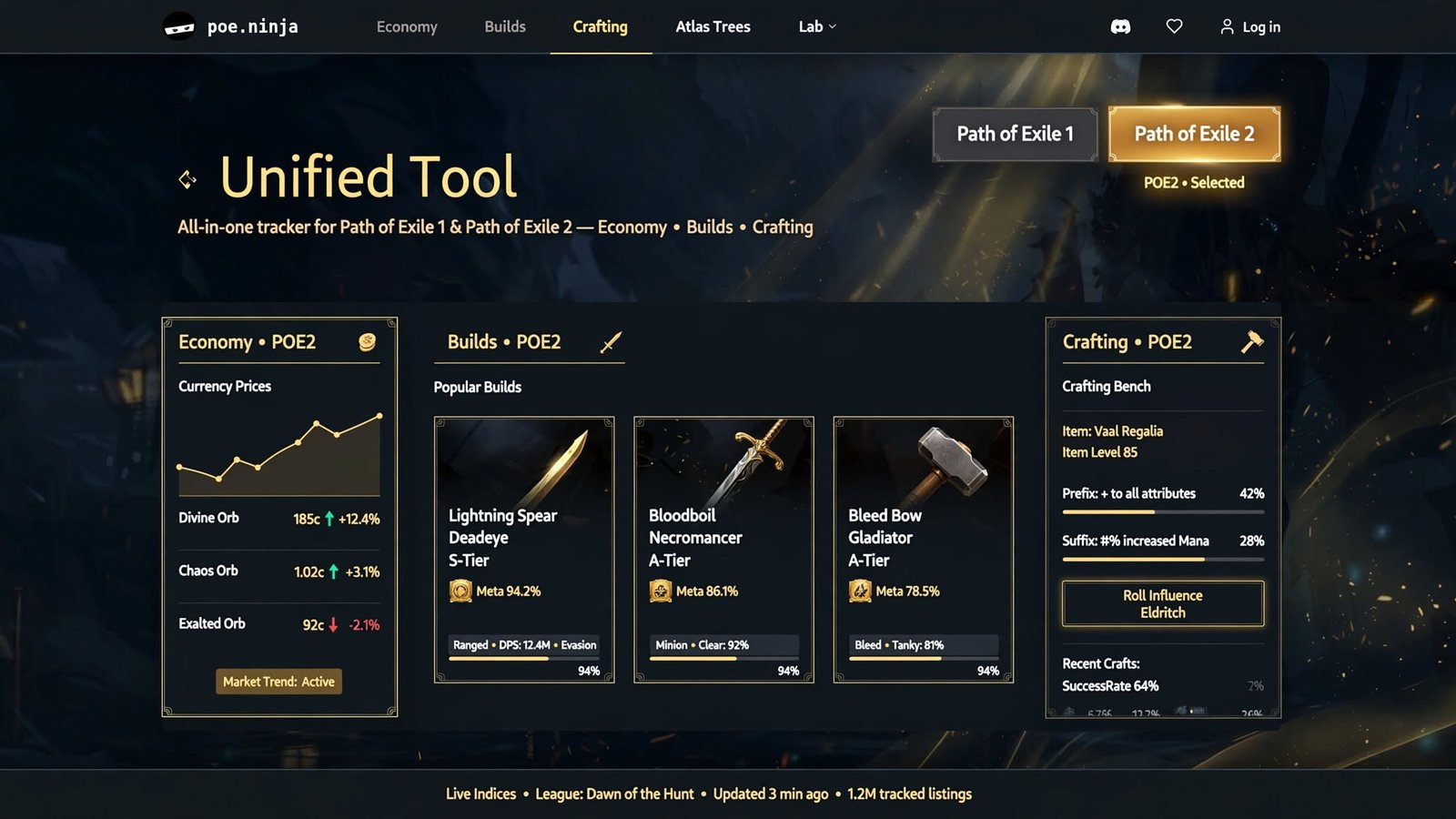
If you searched “poe ninja 2,” here’s the short version: there is no official website or tool actually called “PoE Ninja 2.” What you’re almost certainly looking for is the Path of Exile 2 section of poe.ninja — the community-built statistics and build-tracking site used by both Path of Exile and Path of Exile 2 players.
The confusion is understandable. For most of Path of Exile 2’s early access life, its build and economy data lived on a separate domain, poe2.ninja. That site has since been folded into the main poe.ninja, which is why you’ll still see old guides, YouTube videos, and forum posts referring to “poe2 ninja” or “PoE Ninja 2” as if it were its own product. Some of that phrasing also comes from people simply using “2” as a stand-in for “the second game” rather than for a second website — either way, the destination they’re actually after is the same place.
It doesn’t help that a handful of low-effort, auto-generated web pages have started describing “Poe.ninja 2” as though it were a genuine sequel product with its own feature list and branding. It isn’t. There’s no v2 relaunch, no rebrand, and no separate company behind a “2” version — just one site, one community developer, and a game selector.
Below, we’ll clear up exactly what happened to poe2.ninja, who actually runs poe.ninja, what it can do for Path of Exile 2 players today, how to actually use it step by step, and — just as importantly — how to read its numbers without drawing the wrong conclusions.
Table of Contents
Is “PoE Ninja 2” the Same as poe2.ninja?
Functionally, yes — with a timing caveat. poe2.ninja was a real, separate domain that Path of Exile 2 players used during early access to look up builds, classes, and economy data specific to that game. On August 23, 2026, poe.ninja announced it had merged poe2.ninja into the main poe.ninja site. Old poe2.ninja bookmarks and external links now redirect into poe.ninja, and a game selector at the top of the site lets you switch between Path of Exile and Path of Exile 2 without leaving the domain. One holdover from the merge: Path of Building character-import links for PoE2 were, at the time of the announcement, still temporarily generated as poe2.ninja URLs while the developer finishes migrating them — so seeing that domain pop up in a PoB link isn’t an error.
So “PoE Ninja 2” isn’t a second, upgraded version of poe.ninja. It’s an informal name that grew out of that now-retired separate domain, and out of players casually using “2” to mean “the Path of Exile 2 version.”
Why merge the two sites at all? poe.ninja’s own explanation is practical rather than dramatic: keeping one codebase and one domain makes it easier to maintain, and a game selector achieves the same separation of data that two domains used to provide — without splitting bookmarks, search rankings, and community links across two places. For most visitors who only care about one game at a time, the merged site behaves almost identically to how the two separate sites used to, just with one extra click to confirm which game you’re viewing.
Who Actually Runs poe ninja 2?
poe.ninja is not a Grinding Gear Games product, and it isn’t run by a studio or a company in the traditional sense — it’s a community-built tool, publicly credited in Path of Exile tooling directories to a developer known as “rasmuskl.” That single-developer, fan-project origin is part of why the site has historically evolved feature by feature (Atlas trees, character trade search, defensive stat breakdowns, and so on) rather than shipping as a single finished “1.0” product with a fixed feature set from day one — and it’s also why “PoE Ninja 2” was never going to be an official rebrand; the site has just kept iterating under the same name.
What Is poe ninja 2?
poe.ninja is a community-made, unofficial data and statistics site for Path of Exile and Path of Exile 2, both developed by Grinding Gear Games. The site states directly that it “is not affiliated with or endorsed by Grinding Gear Games” — it’s fan-built, not a first-party GGG tool, even though it’s become the de facto standard reference used by both communities.
It pulls data from players’ public character profiles and from each game’s economy/trade data to show:
- Build overviews — what skills, ascendancies, and gear top-ladder characters are actually using
- Character pages — individual player builds with gear, passive tree, and (when available) calculated stats via Path of Building integration
- Economy/currency data — prices and price trends for currency, unique items, and other tradeable goods
- Passive skill tree and Atlas tree explorers — standalone planning tools that work for both games
- News/changelog posts — the site publishes its own short update posts (like the poe2.ninja merger announcement) when it ships a new feature, which is a useful way to confirm what’s actually new versus what a guide elsewhere might be describing out of date
Because both games are supported from the same account and interface, logging in or linking your account once is enough to see your own characters across whichever game you’re currently viewing — you don’t need a separate login for the Path of Exile 2 side.
Read More: https://gamespuma.com/poe2-ninja/
What Can You Find on the Path of Exile 2 Side of poe ninja?
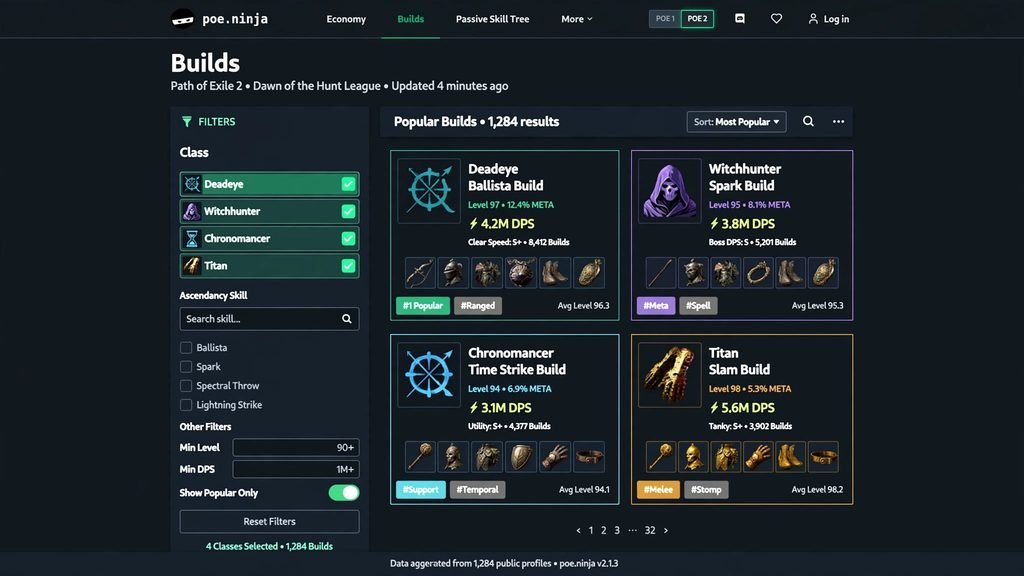
Once you’re on the Path of Exile 2 view (via the game selector), you can currently look at:
- Builds — searchable/filterable by class, ascendancy, and skill, based on real character data pulled from top-ladder players. This is the section most people mean when they say they want to “check poe ninja 2 for builds.”
- Character profiles — gear, passive allocations, and gem/skill setups for individual PoE2 characters, so you can see exactly how a specific player put a build together rather than just an abstract summary.
- Currency and item pricing — tracked for the current Path of Exile 2 league, covering things like currency-to-currency exchange ratios and the going rate for notable unique items.
- Path of Building integration — importing a character or a shared PoB code for deeper stat analysis, including calculated DPS, effective health, and resistances that aren’t visible just from looking at a gear screenshot.
- Passive tree and Atlas tree views — the same tree-explorer tools available for Path of Exile 1 also work for Path of Exile 2’s version of the passive tree and endgame atlas, letting you browse allocations without needing to be logged in.
Feature availability can shift as Path of Exile 2 is still in Early Access (a full 1.0 launch is planned for later in 2026 alongside new content such as an additional class), so the exact filters and columns on the site can change between patches — check the site’s own “Docs & FAQ” page for the current feature list rather than relying on any single guide, including this one, as a permanent reference.
It’s also worth understanding why the feature set keeps shifting: Path of Exile 2 itself is still receiving fairly large content updates on a regular cadence, including new leagues, mechanic reworks, and — eventually — additional classes as the game works toward its full 1.0 release. Each of those updates can change what data is meaningful to track (a reworked mechanic might need a new filter, a new class needs its own ascendancy breakdown, and so on), so poe.ninja’s Path of Exile 2 side has generally updated in step with the game rather than staying static.
How to Use poe ninja for Path of Exile 2
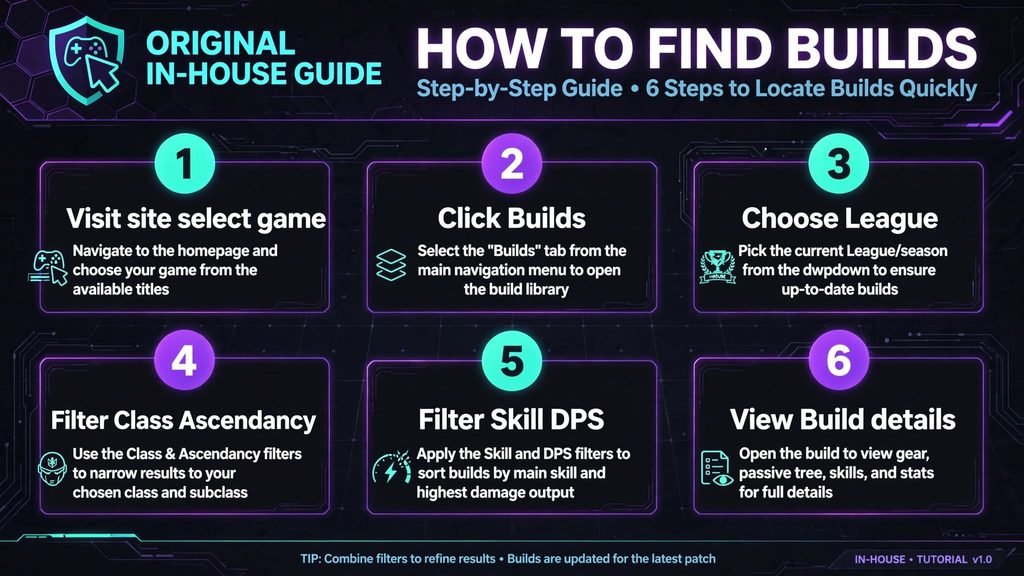
- Go to poe ninja and use the game selector at the top of the page to switch to Path of Exile 2 (the selector remembers your last choice on future visits, and it stays in sync even if you have both games open in separate browser tabs).
- Pick the current league/data set. Build and economy data are tied to a specific league — make sure you’re looking at the active one, not a stale/ended league, before drawing conclusions. Path of Exile 2’s Early Access period has run both a longer-term base league alongside shorter event leagues, so double-check which one you’re viewing if the site offers more than one option.
- Open the Builds section and filter by class, ascendancy, or skill to narrow down what you’re researching. If you’re not sure what you’re looking for yet, sorting by overall popularity first and then narrowing by skill type (melee, spellcaster, minion, and so on) tends to give a clearer picture than scrolling the unfiltered list.
- Click into individual character profiles rather than only reading the aggregate numbers — this is where you actually see the gear, gem links, and passive tree behind a build, instead of just a summary statistic.
- Use the Path of Building import if you want calculated DPS, effective health, and other derived stats rather than just raw gear screenshots. This is also the step most build guides expect you to take before you start copying gear choices, since raw item names alone don’t tell you how the pieces interact.
- Cross-check against the currency/economy section before committing to an expensive build. A build that looks amazing on paper can rely on a specific unique item or currency investment that’s currently priced well outside what a newer player can reasonably afford — the economy tab is how you find that out before you start farming toward it.
How to Read Poe Ninja Statistics (Without Getting the Wrong Idea)
This is the part players most often get wrong: the most popular build on poe ninja is not automatically the “best” build. The site shows you what a slice of the player base — mostly people who’ve reached the higher end of the ladder and made their character public — is actually running. That’s genuinely useful information, but it reflects:
- Popularity/representation, not a verified power ranking
- A bias toward players who invest heavily in gearing and are further along the ladder, which can make expensive, gear-dependent builds look more common than they’d be for an average or new player
- Only the subset of characters that are public and have been indexed, not literally every character in the league
In other words: treat the Builds section as a snapshot of what’s popular and reachable at a given point in a league, and use individual character pages to understand why a setup works, rather than copying the top result on faith.
There’s a second, related caveat worth flagging: Path of Exile 2 is still in Early Access. Balance patches, mechanic reworks, and new leagues have arrived at a fairly steady pace, and each one can shift which skills and ascendancies are considered strong almost overnight. A build that was dominant a patch or two ago may have been quietly weakened, and a previously mediocre one may have been buffed into relevance. Because of that, it’s worth checking the timestamp or league context on any build data you’re looking at — data from an earlier patch of the same league, or from a previous league entirely, doesn’t necessarily reflect the current balance.
PoE Ninja vs. “PoE Ninja 2” (PoE2 Side): What’s Actually Different
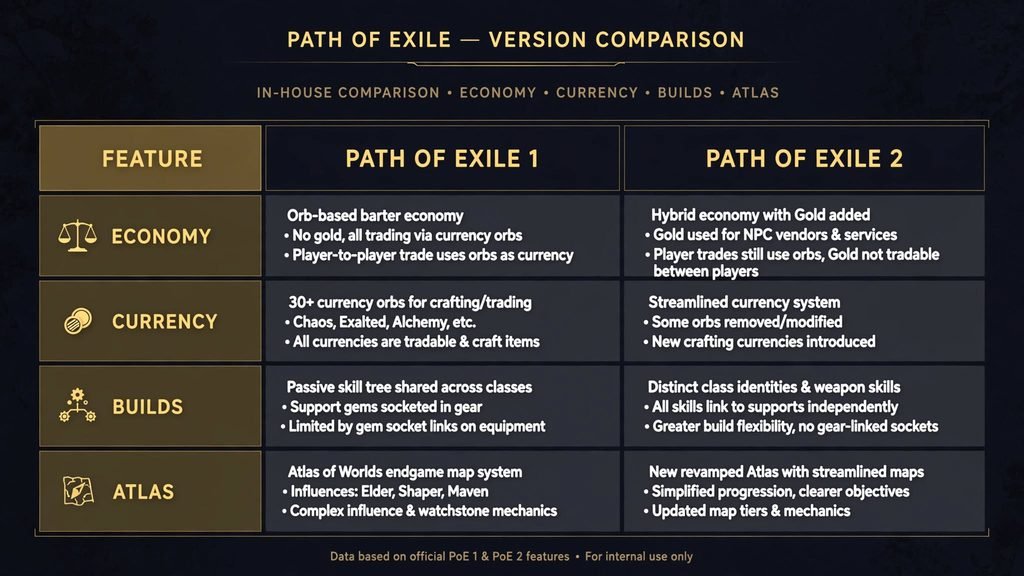
There is no separate branded “PoE Ninja 2” product to compare against the original. The real comparison is between the Path of Exile 1 view and the Path of Exile 2 view inside the same, unified poe.ninja:
| Path of Exile (PoE1) view | Path of Exile 2 view | |
|---|---|---|
| Domain | poe.ninja | poe.ninja (formerly poe2.ninja, now merged) |
| Currency system shown | PoE1’s currency economy (e.g., Chaos/Divine-based pricing) | PoE2’s separate currency economy |
| Build/character data | PoE1 classes, ascendancies, skills | PoE2 classes, ascendancies, skills (a different game system) |
| Maturity of data | Many years of established league history | Still evolving through Early Access, with more frequent balance changes affecting the meta |
The two data sets are kept separate because the games’ classes, skills, currencies, and economies are not interchangeable — mixing them would make the statistics meaningless.
Is It Official?
No. poe.ninja is an unofficial, community-run site. It is not made or endorsed by Grinding Gear Games, the studio behind both Path of Exile and Path of Exile 2. It has, however, become the community’s go-to reference tool for both games.
Is It Free?
Yes, poe.ninja is free to browse and use. Like many free community sites, it discloses that it runs advertising through a third-party ad platform to support hosting and development costs; there’s also a listed option to directly support the site if you want to. No paid tier or account purchase is required to view builds, economy data, or character pages.
Alternatives Worth Knowing About
If you’re researching Path of Exile 2 builds and economy, a few other community resources commonly come up alongside poe.ninja:
- Path of Building (community fork) — the standalone build-planning and DPS-calculation tool that poe.ninja integrates with
- Written build-guide sites (e.g., Mobalytics, PoE Vault–style guides) — useful for step-by-step leveling and gearing advice, which poe.ninja itself doesn’t provide since it’s a data/statistics tool rather than a guide-writing site
- The official Path of Exile Wiki / poe2wiki — for verified mechanics, league history, and patch details straight from documented sources
Each of these serves a different purpose: poe.ninja shows you what players are actually doing right now; guide sites explain how and why to build a certain way; the wiki confirms the underlying mechanics. Most experienced players end up using some combination of all three rather than treating any single one as a complete answer — poe.ninja to see what’s actually popular, a written guide to understand the reasoning and leveling path, and the wiki or official patch notes to confirm a mechanic hasn’t changed since the guide was written.
The Bottom Line
There’s no shortcut version of this that changes the underlying fact: if you typed “poe ninja 2” looking for a distinct, second product, that product doesn’t exist. What does exist is a single, actively maintained community site that happens to cover two different games, a naming history that briefly involved a second domain, and a genuinely useful — if imperfect — window into what the Path of Exile 2 community is currently building, spending, and trading. Used with the caveats above in mind, it’s one of the more efficient ways to get a real, data-backed read on the current PoE2 meta rather than relying on guesswork or outdated guides.
FAQ Section
What is “PoE Ninja 2”? It’s not an official product name. It’s an informal way some players and older guides refer to the Path of Exile 2 side of poe.ninja, dating back to when that data lived on a separate site, poe2.ninja.
Is “PoE Ninja 2” the same as poe2.ninja? Effectively yes. poe2.ninja was a real, separate domain for Path of Exile 2 data. It was merged into the main poe.ninja site on August 23, 2026, with redirects in place for old links.
Is poe.ninja official? No. It’s a community-made, unofficial tool. Its own site states it is not affiliated with or endorsed by Grinding Gear Games, the developer of Path of Exile and Path of Exile 2.
What can I do on poe.ninja for Path of Exile 2? Browse build data by class/ascendancy/skill, view individual character profiles and gear, check currency and item prices for the current league, and import characters into Path of Building for calculated stats.
Does poe.ninja show Path of Exile 2 item prices? Yes, its economy section tracks currency and item pricing for the current Path of Exile 2 league. Prices change constantly as the league economy shifts, so treat any specific number as a snapshot rather than a fixed value.
How do I find Path of Exile 2 builds on poe.ninja? Switch to the Path of Exile 2 view using the game selector, open the Builds section, and filter by class, ascendancy, or skill.
Is poe.ninja free to use? Yes. It’s ad-supported, with an optional way to directly support the site’s development.
How accurate are the build statistics? They accurately reflect what’s happening among the players whose characters are public and indexed — but “most popular” isn’t the same as “objectively best.” Popularity is skewed toward well-geared, higher-ladder players, and it doesn’t capture every character in a league.
Does the same site cover both Path of Exile and Path of Exile 2? Yes. poe.ninja is one unified site with a game selector; PoE1 and PoE2 data (classes, currencies, builds, economy) are kept fully separate within it because the two games’ systems aren’t interchangeable.
Do I need an account to use poe.ninja? No account is required to browse builds, economy data, or character searches. Logging in or linking your account mainly helps if you want the site to recognize your own characters more directly, but it isn’t a requirement for general use.
Why does build data on poe.ninja change so often for Path of Exile 2? Because Path of Exile 2 is still in Early Access and receives frequent balance changes, new leagues, and mechanic reworks, the builds and skills that look strongest on poe.ninja can shift from patch to patch. Treat any given snapshot as tied to the league and patch it was taken from, not as a permanent tier list.
Who built poe.ninja? It’s a community-developed project, publicly credited to a developer known as “rasmuskl,” rather than a Grinding Gear Games team or a commercial studio.
Sources Used
- poe.ninja homepage and “Merging poe2.ninja into poe.ninja” post (poe.ninja) — site description, features, merger announcement, non-affiliation disclosure
- poe.ninja’s Path of Exile 2 Builds page
- Community PoE tools index (developer attribution for poe.ninja)
- Path of Exile 2 patch/league coverage (Forbidden Rites 0.5.5 event, current PoE2 Early Access status, planned 1.0 launch) — MassivelyOP, Mobalytics
- Path of Exile (PoE1) 3.29 “Curse of the Allflame” league coverage — PoE Vault, PCGamesN, MassivelyOP
- poe2wiki.net challenge league history
- Community discussion threads referencing real usage/friction with poe.ninja character and trade-history tracking

Written by Daniel Carter
Daniel Carter is a dedicated gaming writer who enjoys turning complex gaming topics into clear, useful, and engaging content. He covers game guides, tips, reviews, features, and the latest developments across the gaming world. His approach focuses on research, accuracy, and practical value, helping readers discover new games, improve their gameplay, and stay informed about the industry. For Daniel, great gaming content is not just about information—it is about making every article genuinely worth reading.
1 thought on “What Does “PoE Ninja 2” Mean? (And How to Use poe.ninja for Path of Exile 2)”